3 min read
TAKE A BREAK
How Blockchain Gaming Works, Simply Explained
Updated: 6/16/2026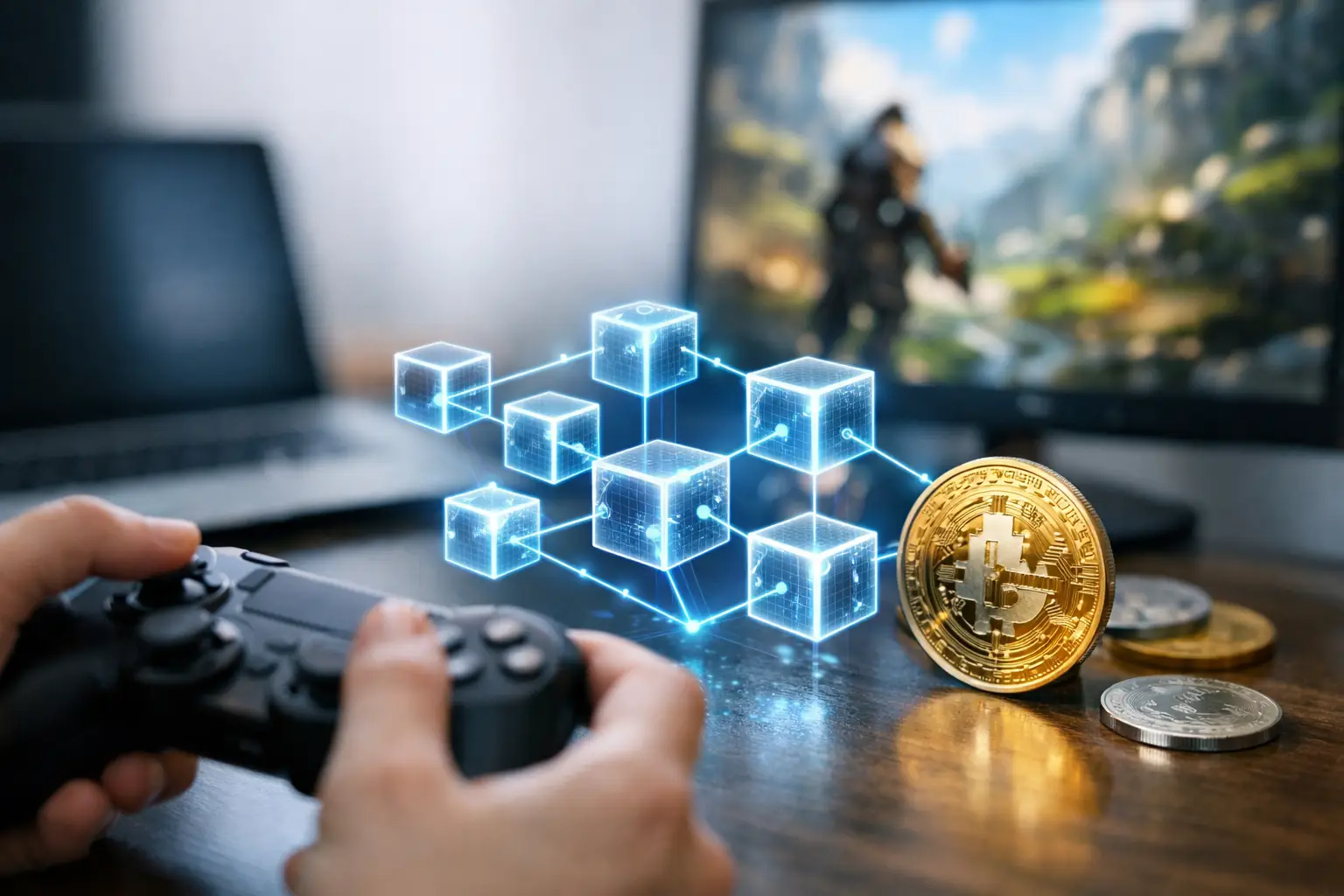
Picture buying a rare in-game skin, then actually being able to keep it, sell it, or move it outside the game’s own marketplace. That basic idea is the easiest way to understand how blockchain gaming works. Instead of every item, character, or reward living only inside one company’s private database, some game assets are recorded on a shared digital ledger that players can access through their own wallets.
That sounds like a big shift, because it is. Traditional games usually give you access to digital stuff, but not much control over it. Blockchain-based games try to change that by giving players a stronger claim over certain items and making transactions more transparent. The catch is that the experience can also feel more complicated, more expensive, and sometimes more speculative than regular gaming.
How blockchain gaming works in plain English
At its core, blockchain gaming mixes regular video game systems with a blockchain, which is a public record of transactions spread across many computers. In a normal game, if you earn a sword, card, skin, or piece of land, the developer stores that information on its own servers. In a blockchain game, some of those items can be tied to a player-owned wallet and tracked on-chain.
That means the game still has graphics, mechanics, servers, and rules like any other title. The blockchain part usually handles ownership records, transfers, and sometimes rewards or marketplace activity. So the game itself is not magically running entirely on a blockchain. Usually, only specific parts of it are.
This distinction matters. A fast-paced shooter or big online role-playing game cannot realistically put every movement, attack, and animation on-chain without becoming painfully slow or costly. Most blockchain games use the ledger for ownership and trading while keeping gameplay logic off-chain where it can run faster.
The basic pieces behind the system
To understand the setup, it helps to look at the main moving parts.
Wallets act like your login plus inventory key
Instead of signing in only with an email address, players often connect a digital wallet. That wallet can hold in-game assets and prove they belong to you. If the game supports it, your wallet may also let you buy, sell, or transfer those assets without asking the developer for permission each time.
For new players, this is often the first point of friction. Wallets add a layer of ownership, but they also add responsibility. Lose access to your wallet, and recovering your items may be much harder than resetting a password in a standard game.
Digital assets can be individually owned
Some blockchain games turn characters, cards, skins, weapons, or virtual land into unique or limited digital assets. These assets can sometimes be traded on marketplaces, used in the game, or held as collectibles.
The big appeal is portability of ownership, not always portability of use. Just because you own a game item in your wallet does not mean every other game can use it. A dragon from one game will not automatically show up in another just because both use blockchain tech. Cross-game compatibility gets talked about a lot, but in practice it is still pretty limited.
Smart contracts handle the rules
Smart contracts are bits of code stored on the blockchain that execute certain actions automatically when conditions are met. In gaming, they may manage item creation, trades, reward distribution, or access rules.
Think of them as automated rulebooks. If a player buys an item, the contract can transfer ownership. If a game creates a limited batch of collectibles, the contract can enforce the cap. This can reduce the need for a central middleman, but it also means bugs in the code can become serious problems.
What actually happens when you play
From a player’s point of view, the experience depends on the game. In some cases, it feels almost like a normal game with an added marketplace. In others, the blockchain layer is front and center from the moment you start.
A typical flow might look like this: you connect a wallet, get access to a starter character or item, and begin playing. As you progress, you might earn rewards, craft items, or purchase assets that are recorded on-chain. If you want, you can later trade those assets with other players.
Some games also tie progression to ownership. For example, holding a certain character might grant access to special modes, tournaments, or quests. That can create a stronger sense of possession, but it can also create paywalls that feel less like gaming and more like gated membership.
Why people find it interesting
The main selling point is ownership. In a regular game, if the publisher shuts down servers or removes an item, your control is limited. In a blockchain game, assets tied to your wallet may remain in your possession even if the game changes.
There is also more visible scarcity. If a game says there are only 1,000 copies of a certain item and that rule is enforced on-chain, players can verify it. That kind of transparency is a big part of the appeal.
Then there’s the marketplace angle. Some players like the ability to trade items more freely rather than being locked into a closed ecosystem. For collectors, that can make the experience feel closer to owning physical trading cards than renting digital cosmetics.
Still, the value of any item depends on whether people care about the game in the first place. A scarce item from a forgotten title is still from a forgotten title.
Where the model gets messy
This is where the hype usually outruns reality. Blockchain gaming can sound empowering, but it introduces trade-offs that regular games often avoid.
First, there’s usability. Wallet setup, transaction approvals, and network fees can be confusing for casual players. If someone just wants to tap Play on their phone during lunch, a complicated onboarding flow is a problem.
Second, there’s volatility around item prices and reward systems. When too much attention shifts from gameplay to resale value, the game can start feeling like a marketplace with mini-games attached. That turns off a lot of players fast.
Third, ownership is not absolute in the way it’s often marketed. You may own the token tied to an item, but the game developer still controls the game world where that item matters. If the developer changes the stats, removes support, or shuts down servers, your asset may still exist, but its usefulness can collapse.
There are also environmental and technical concerns, although those vary depending on the network being used. Some systems are more efficient than others. So when people debate blockchain gaming, they are often talking about very different setups.
How blockchain gaming works compared with regular gaming
The simplest comparison is this: traditional games are mostly platform-controlled, while blockchain games try to add player-controlled ownership for specific assets.
In a regular game, buying an item usually means buying permission to use it under the publisher’s rules. In a blockchain game, buying an item may mean holding a transferable asset in your own wallet. That sounds better on paper, but it comes with more complexity and less hand-holding.
For developers, blockchain can create new business models around digital collectibles, player economies, and community participation. For players, it can mean more control and more risk at the same time.
That’s why the question is not whether blockchain gaming is better. It’s whether the added ownership and tradability actually improve the game you are playing. Sometimes they do. Sometimes they mostly add friction.
So, who is this really for?
Right now, blockchain gaming tends to appeal most to players who enjoy collecting, trading, and experimenting with newer tech. If you like owning rare digital items and don’t mind a few extra setup steps, it can be genuinely interesting.
If you mostly care about pure gameplay, story, balance, and convenience, you may not find the blockchain layer very exciting unless it stays almost invisible. That is probably where the category has to go if it wants broader appeal. Most players do not want a technology lesson before they can start a match.
The most promising version of this space is one where the tech fades into the background and the game comes first. If blockchain gaming is going to stick, it won’t be because the ledger is flashy. It’ll be because the experience feels fun, fair, and worth coming back to after the novelty wears off.