3 min read
TAKE A BREAK
How to Clean Cast Iron the Right Way
Updated: 6/24/2026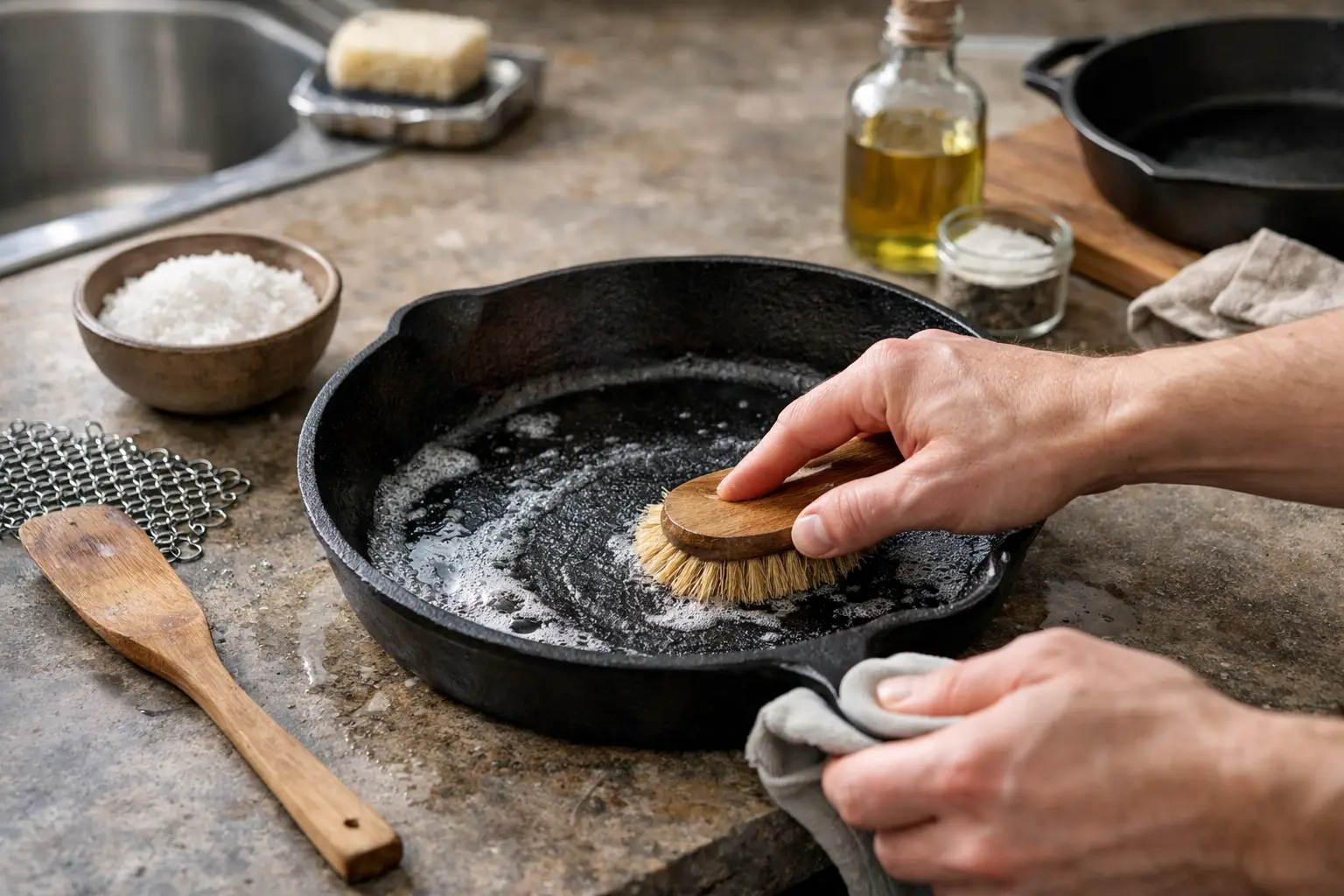
A cast iron skillet can handle screaming-hot sears, campfire cooking, and years of weeknight dinners - but it still gets treated like a mystery object. If you’ve ever wondered how to clean cast iron without stripping it, rusting it, or getting judged by someone’s grandma, the good news is this: it’s much simpler than the internet makes it sound.
The biggest myth is that cast iron is fragile. It’s not. What it does need is the right kind of care. Think less babying, more basic maintenance. Once you know what to do after cooking, cleaning cast iron becomes a two-minute habit instead of a whole kitchen debate.
How to clean cast iron after everyday cooking
For most meals, the best time to clean your pan is right after it cools enough to handle safely. You want it warm, not blazing hot. That makes stuck-on bits easier to lift without shocking the metal.
Start by wiping out loose crumbs, grease, or food residue with a paper towel or cloth. If the pan is mostly clean, that may be enough. If there’s more buildup, rinse it under warm water and scrub with a soft sponge, a brush, or a non-metal scrubber.
Yes, you can use a little dish soap. That’s the part people love arguing about, but modern soap in small amounts is generally fine. What matters more is not soaking the pan for ages and not leaving water sitting on it afterward. A quick wash will not destroy a well-seasoned skillet.
Once the pan is clean, dry it completely. Not mostly dry. Completely dry. Use a towel first, then place it on the stove over low heat for a minute or two so any hidden moisture evaporates. After that, rub in a very thin layer of oil while the pan is still warm. You’re not deep-frying the skillet. You just want a light coat that keeps the surface protected.
When food is stuck on hard
Sometimes dinner leaves behind more than a few crumbs. Burned cheese, sugary sauces, and crusty meat bits can cling to the surface in a way that a sponge won’t fix.
In that case, add a little warm water to the pan and use a scraper or stiff brush. If the residue is stubborn, simmer the water for a minute or two on the stove. That loosens the mess without making you attack the pan like it owes you money.
Coarse salt can also help. Pour in a small amount, then scrub with a paper towel or cloth. The salt acts like a gentle abrasive and can lift stuck food without being too aggressive. It’s especially useful when the pan has greasy residue that keeps smearing around.
If you need chainmail scrubber-level force, that’s usually okay too, especially for serious buildup. Just know that heavier scrubbing can wear down seasoning over time. That doesn’t mean the pan is ruined. It just means you may want to refresh the seasoning afterward.
How to clean cast iron without ruining the seasoning
Seasoning is the slick, dark layer baked onto the pan over time. It’s not a delicate coating in the way nonstick pans are delicate, but it can thin out if you scrub too hard, cook lots of acidic foods, or leave the skillet wet.
The easiest way to protect seasoning is to avoid the habits that damage it most. Don’t soak cast iron in the sink. Don’t put it in the dishwasher. Don’t air-dry it and hope for the best. Water is the real troublemaker here.
Soap is less dramatic than people think. A small amount during regular cleaning is usually fine. What strips seasoning faster is repeated harsh scrubbing with abrasive cleaners or steel wool when you don’t actually need it.
If your pan looks a little dull after cleaning, that’s not automatically a problem. A cast iron skillet doesn’t have to look glossy to work well. What you’re watching for is bare gray metal, flaking, sticky buildup, or orange rust. Those are signs the surface needs a little more attention.
What to do if your cast iron has rust
Rust looks scary, but it’s fixable. Cast iron is basically the comeback pan of the kitchen.
If you spot light rust, scrub it off with steel wool or a tough scrubber until you get back to clean metal. Wash the pan, dry it fully, and then reseason it. For heavier rust, you may need a few passes, but the process is the same.
To reseason, rub a very thin layer of neutral oil over the entire pan, including the outside. Wipe off the excess so it doesn’t feel greasy. Then place it upside down in a 450-degree oven for about an hour, with something underneath to catch drips. Let it cool in the oven. One round may be enough, but a badly neglected pan might need two or three.
It’s not glamorous, but it works. And once the rust is gone, regular drying and light oiling usually keep it from coming back.
The soap question, settled like normal people
The old rule was never use soap on cast iron. That came from a time when soaps were harsher and more likely to strip the pan. Modern dish soap is milder, so the better rule is this: use a little if you need it, and don’t overthink it.
If you cooked eggs in butter and the pan wipes clean, skip the soap. If you made salmon or burgers and want to cut the grease, a small drop of soap is completely reasonable. The pan will survive. Your kitchen will smell better.
What still doesn’t belong here is a long soak in soapy water. That gives moisture time to creep in and invites rust, especially around rough spots or worn seasoning.
Common mistakes that make cast iron harder to clean
Most cast iron problems start with one of a few avoidable habits. The first is leaving the pan in the sink “for later.” Later turns into rust surprisingly fast.
The second is using too much oil after cleaning. A thin layer protects the surface. A thick layer turns sticky and weird, which people sometimes mistake for seasoning. It’s not. It’s residue.
The third is storing the pan while it’s still damp or covering it in a way that traps moisture. If you stack pans, slipping a paper towel between them can help absorb any leftover humidity and protect the finish.
There’s also the panic move: assuming every stain or uneven patch means the skillet is ruined. Cast iron is rarely ruined. Ugly, sticky, smoky, rusty - yes. Finished forever - usually no.
When your pan needs more than basic cleaning
If the surface feels gummy, smells off, or has patchy flakes, a quick wash may not be enough. That’s when it makes sense to strip down the problem area and reseason the pan.
This is especially common if someone applied too much oil during seasoning or baked on layers that never fully polymerized. The result is a tacky finish that grabs dust and feels wrong. If that sounds familiar, scrub the problem spots, wash, dry, and reseason with less oil than you think you need.
Cast iron also gets trickier if you cook lots of tomato sauce, vinegar-heavy dishes, or sugary glazes. Acidic foods can wear at seasoning, and sticky sauces leave behind more cleanup. That doesn’t mean you can never cook those foods in cast iron. It just means the pan may need a little extra care after.
The simplest cast iron routine to keep
If you want the low-maintenance version of cast iron care, here it is: clean it soon after cooking, use water and a scrubber when needed, dry it completely, then add a whisper-thin coat of oil. That’s the whole routine.
Do that consistently and your skillet usually gets better over time. The surface smooths out, cleanup gets easier, and the pan starts earning its reputation.
Cast iron doesn’t need perfection. It needs a little attention and a lot less fear. Once you stop treating it like a kitchen myth, it becomes one of the easiest pieces of cookware to keep around.