3 min read
TAKE A BREAK
How to Pair Whisky Without Overthinking It
Updated: 6/29/2026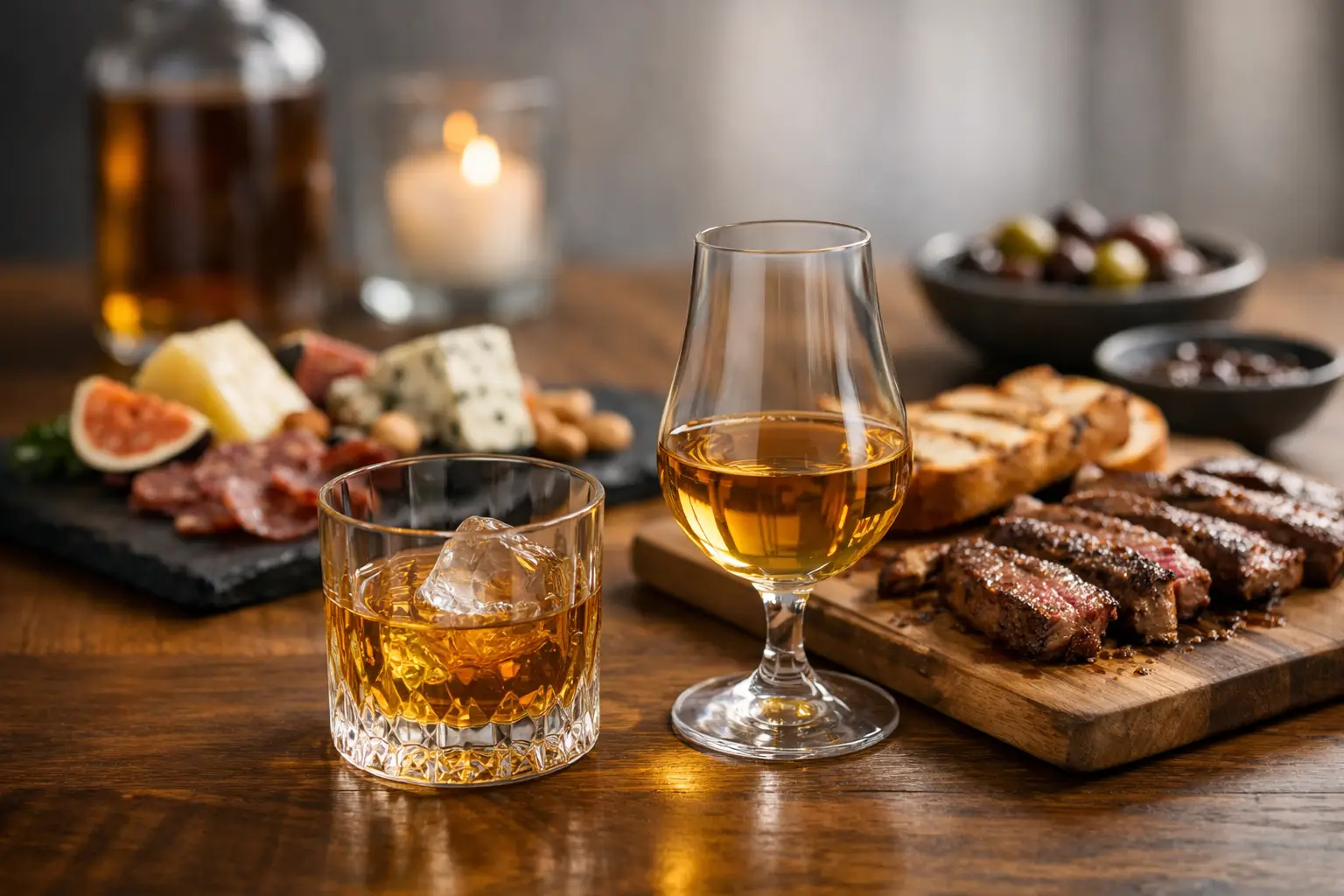
You don’t need a tasting certificate or a cabinet full of rare bottles to figure out how to pair whisky. What you do need is a simple way to think about flavor, because the best pairings usually come down to balance, contrast, and not letting one thing bully the other.
Whisky can be sweet, smoky, spicy, fruity, nutty, salty, or rich, sometimes all in the same glass. That’s why pairing it feels harder than pairing wine for a lot of people. But once you stop chasing perfect matches and start looking for combinations that make sense on the palate, it gets much easier.
How to pair whisky: start with the flavor, not the label
A common mistake is pairing by region first. Scotch with one dish, bourbon with another, Irish whiskey with something lighter. That can help a little, but it’s not the smartest starting point. Flavor matters more than category.
A peaty Islay Scotch behaves very differently from a soft Speyside single malt. A high-rye bourbon can come across peppery and bold, while a wheated bourbon may feel rounder and sweeter. So before you think about food, think about what’s in the glass.
If your whisky leans sweet, with notes like vanilla, caramel, honey, or baked apple, it usually works well with salty or lightly spicy foods. If it leans smoky, earthy, or medicinal, it tends to shine next to rich, fatty, or boldly flavored dishes. If it’s bright and fruity, you’ve got more flexibility, especially with cheese, roasted chicken, and desserts that aren’t too sugary.
The easiest rule is this: match intensity. A delicate whisky gets buried by heavy food. A huge smoky dram can flatten a subtle dish in one sip.
The three pairing moves that actually work
Most good whisky pairings fall into one of three camps.
The first is complement. This is when the food and whisky share flavor traits. A bourbon with caramel and vanilla notes beside bread pudding makes sense because both are warm, sweet, and dessert-friendly. A sherried single malt with dried fruit and nuts plays well with fruitcake, dark chocolate, or aged cheese for the same reason.
The second is contrast. This is often more exciting. Smoky whisky next to creamy cheese works because the softness of the cheese calms the peat while the whisky cuts through the richness. A sweeter whiskey with salty cured meat creates a similar push and pull.
The third is cleanse. High-proof or spicy whiskies can reset your palate between rich bites. That’s why they can work with fatty steak, barbecue, or charcuterie. The whisky acts almost like a sharp seasoning rather than just a drink on the side.
If you remember those three moves, you already know more than most people pretending to freestyle their way through a tasting night.
Best foods to pair with whisky
Cheese is probably the easiest place to start. It gives you enough richness and salt to hold up against whisky, but enough variation to test different styles. Creamy cheeses like brie or Camembert work nicely with lighter, fruit-forward whiskies or gentle Highland malts. Sharp cheddar loves bourbon and rye because the sweet-spice combo clicks fast. Blue cheese is trickier, but with a rich sherried Scotch or something smoky, it can be excellent.
Chocolate is another classic, but not every chocolate works with every bottle. Dark chocolate tends to pair best because it has bitterness and depth. That gives whisky something to work with. Milk chocolate can be too sweet unless the whisky is assertive enough to cut through it. A smoky Scotch with dark chocolate can taste dramatic in a good way. Bourbon with chocolate and sea salt is an easy crowd-pleaser.
Steak and whisky are a natural match, especially when the whisky has enough structure to stand next to the char. Bourbon works well with grilled steak because the caramelized oak and sweetness echo the browned crust. Rye can be great too if you want more spice. With smoky Scotch, the pairing can be brilliant, but only if you like big flavors stacking on top of each other.
Barbecue is where things get fun. Sweet sauces, smoke, fat, and spice all give whisky room to play. Bourbons usually do well here because they already bring vanilla, brown sugar, and charred oak. Smokier whiskies can also work, though sometimes smoke-on-smoke can get a little intense. It depends on the dish. Pulled pork might love it. A lighter smoked chicken may not.
Desserts can work beautifully, but restraint matters. If the dessert is much sweeter than the whisky, the spirit can taste harsh or thin. That’s why fruit tart, pecan pie, bread pudding, and dark chocolate desserts tend to beat super-sugary frostings or candy-heavy treats. A sweeter whisky often works best, but a richer single malt can also show well if the dessert has nuts, spice, or dried fruit.
How to pair whisky with common styles
Bourbon is usually the easiest starting point for beginners. Its notes of vanilla, caramel, oak, and baking spice make it friendly with barbecue, pecans, glazed nuts, cheddar, bacon, grilled meats, and apple desserts. If the bourbon is high proof, it may need richer food to keep things balanced.
Rye is sharper and spicier, so it tends to like food with a little edge. Think pastrami, pepper-crusted meats, aged cheese, or desserts with cinnamon and clove. It can be great with charcuterie because the spice in the whiskey keeps things lively.
Irish whiskey often leans lighter and smoother, though there’s plenty of range. In general, it works well with roasted chicken, soft cheese, shortbread, apple-based desserts, and lighter smoked foods. If you’re serving people who say whisky is too intense, Irish whiskey is often a smart entry point.
Scotch is where things split. A lighter Speyside or Highland malt can pair with buttery dishes, roasted nuts, fruit desserts, and creamy cheeses. A sherried Scotch likes rich flavors such as dried fruit, dark chocolate, and aged cheese. Peated Scotch is the wildcard. It’s incredible with smoked salmon, blue cheese, cured meat, or oysters for some drinkers, but too much for others. Peat is polarizing, so pair with confidence, not assumptions.
Japanese whisky, when it’s more delicate and elegant in style, can work especially well with lighter foods, subtle desserts, and dishes where texture matters as much as flavor. If the whisky is restrained, the food should be too.
A few pairings that usually win
If you want fast answers, these combinations are hard to mess up: bourbon with pecan pie, rye with sharp cheddar, sherried Scotch with dark chocolate, peated Scotch with smoked salmon, and Irish whiskey with apple tart.
That said, “usually” matters. A heavily peated bottle might overwhelm smoked salmon if both are especially intense. A super-dry dark chocolate can make a gentle whisky seem flat. The label gives you clues, but the specific bottle still decides the outcome.
What to avoid when pairing whisky
The biggest issue is overpowering the whisky or the food. Very spicy food can flatten subtle notes and make alcohol feel hotter. Extremely sweet desserts can make even a good whisky seem bitter. Delicate fish often disappears next to oak-heavy or smoky pours.
Another mistake is serving whisky too strong for the setting. A high-proof cask-strength bottle might be exciting on its own but rough with food unless you add a drop of water. Water can open the whisky and make the pairing more comfortable without ruining anything.
Temperature matters too. Ice-cold food can mute flavor, and whisky served too warm can feel more alcoholic than expressive. Room temperature whisky and properly served food usually do the job better than anything fussy.
How to test pairings at home without making it a project
You don’t need a formal tasting board. Pour a small amount of whisky, set out two or three foods, and try each in this order: taste the food, sip the whisky, then go back to the food. That last bite tells you whether the pairing actually improved anything.
Keep portions small. Rich foods and strong pours pile up quickly. If you’re trying multiple whiskies, move from lighter to bolder so your palate doesn’t get blown out early.
It also helps to ask one simple question: what changed? Maybe the whisky got sweeter, the smoke softened, the cheese tasted nuttier, or the dessert suddenly felt less sugary. That shift is the whole point.
The good news is that learning how to pair whisky is less about rules and more about paying attention. Start with flavor, match intensity, and trust the combinations you want another bite and sip of right away. That instinct is usually better than any pairing chart.