3 min read
TAKE A BREAK
OLED vs QLED TVs: Which One Wins?
Updated: 6/8/2026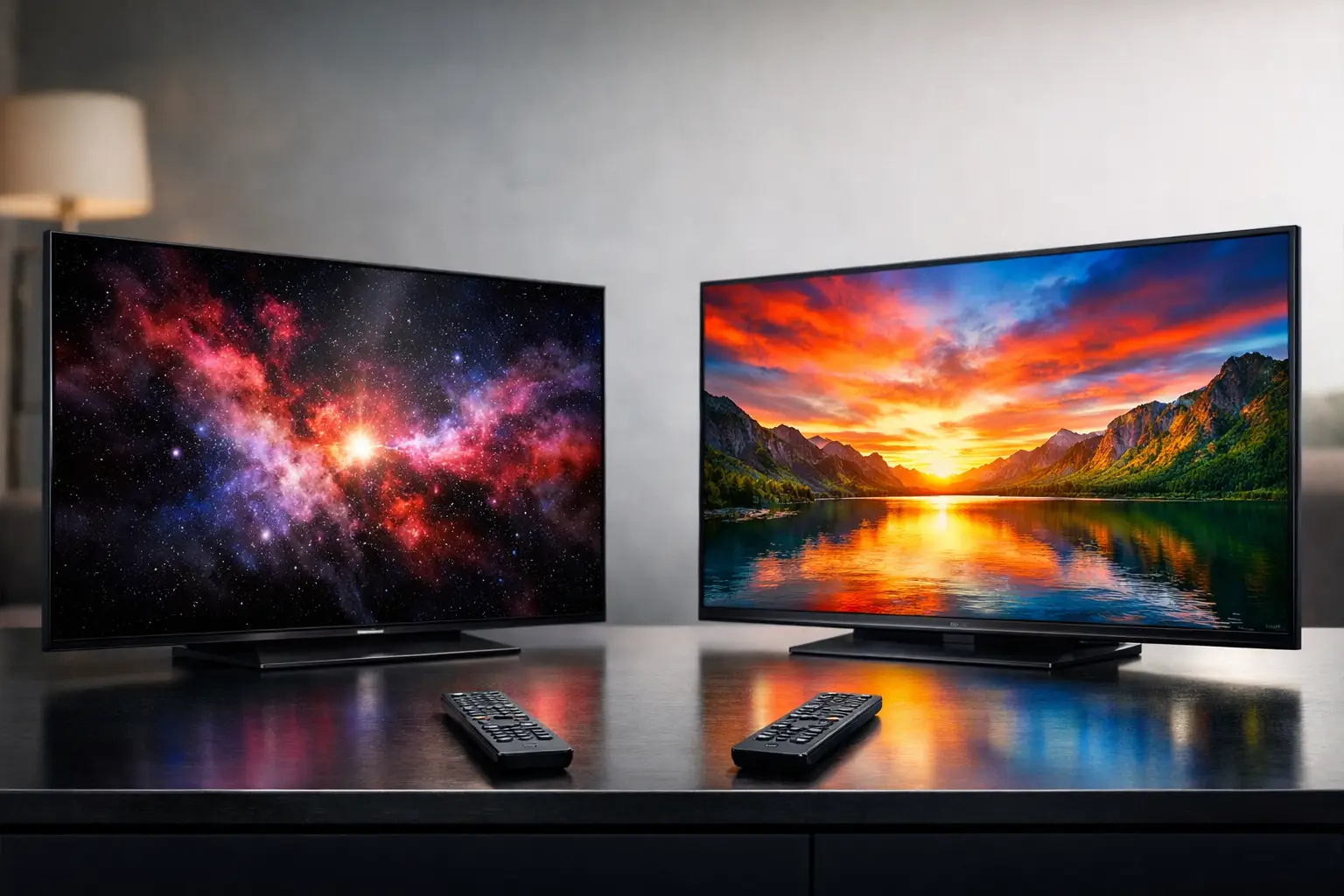
Shopping for a new screen gets confusing fast, especially once the oled vs qled tvs debate shows up in every product page, review, and showroom tag. Both can look excellent. Both can be expensive. And both are often marketed like they belong to completely different universes when the real answer is much simpler - the best pick depends on your room, your habits, and how picky you are about picture quality.
OLED vs QLED TVs at a glance
If you want the shortest possible version, OLED is usually the picture-quality favorite, while QLED is often the brighter and more budget-flexible option. That single sentence covers a lot, but not enough to spend real money confidently.
OLED stands for organic light-emitting diode. Each pixel lights itself, which means the TV can shut off individual pixels completely. That gives OLED its famous deep blacks and high contrast.
QLED stands for quantum dot LED. It still uses an LED-based backlight, but adds a quantum dot layer to improve brightness and color. In plain English, QLED TVs can get very bright and often deliver punchy color, especially in sunny rooms.
Neither technology is automatically better for everyone. If you mostly watch movies at night and care about rich contrast, OLED has a real edge. If your living room gets blasted with daylight and you want something vivid without climbing to premium pricing too fast, QLED starts making a lot of sense.
Picture quality: where OLED usually pulls ahead
This is the part that makes people fall for OLED in stores. Because each pixel can turn on and off independently, dark scenes look cleaner and more dramatic. Black areas actually look black instead of dark gray. That matters more than people think, especially in movies, prestige TV shows, and games with moody lighting.
OLED also tends to have better viewing angles. If you're sitting off to the side on a sectional or watching with a group, the image stays more consistent. Colors and contrast don't wash out as quickly.
QLED can still look great, and some higher-end models look extremely impressive. But because QLED relies on a backlight, it can struggle more with precise black levels. Some sets use local dimming to improve this, and the best ones do it well, but OLED still has the cleaner trick here.
That said, not everyone notices the difference the same way. If you're upgrading from an older basic LED TV, even a midrange QLED may feel like a huge jump.
Brightness: QLED has a real advantage
If your TV sits across from big windows, brightness matters a lot. This is where QLED often wins.
QLED TVs can push much higher peak brightness than many OLED models, which helps with daytime viewing and HDR highlights. Sports, news, and casual streaming can look more vibrant when the room is bright. Reflections are still a factor, but stronger brightness helps the image hold up.
OLED has improved over the years, and newer models are brighter than older ones. But if your main problem is glare and ambient light, QLED usually gives you more headroom.
This is one of the biggest it-depends moments in the whole OLED vs QLED TVs conversation. A TV that looks stunning in a dim demo room may not be the best fit for a sun-filled family room at 2 p.m.
Color and HDR: both can impress
QLED's quantum dot layer helps produce rich, vivid color, and that can look especially sharp with bright HDR content. Nature documentaries, animated movies, and sports often pop on a good QLED.
OLED, though, tends to feel more cinematic because of the way contrast and black levels shape the image. Even if QLED can look brighter, OLED often looks more refined in darker scenes.
So which looks better? If you like a bold, bright, eye-catching image, QLED can be very satisfying. If you prefer a more film-like picture with better shadow detail and contrast, OLED usually feels more premium.
Gaming performance: both are strong now
A few years ago, this category had more clear winners and losers. Now, both OLED and QLED models can be excellent for gaming, especially in the midrange and premium tiers.
What matters most is support for features like 120Hz refresh rates, low input lag, variable refresh rate, and HDMI 2.1. You'll find those on many TVs in both camps.
OLED gets a lot of love from gamers because the pixel response times are fast, which helps motion look crisp. Games can feel incredibly smooth and responsive. Dark game environments also benefit from OLED's black levels.
QLED, meanwhile, can be a smart gaming choice for brighter rooms or for players who leave games paused for long stretches. That last part matters because OLED still carries some burn-in risk.
Burn-in and longevity: the trade-off people always ask about
Yes, OLED burn-in is real. No, it is not guaranteed to happen.
Burn-in happens when static elements like logos, HUDs, or news tickers stay on screen so often that faint image retention becomes permanent over time. For most mixed-use viewers, it is less likely than it used to be, thanks to smarter panel protections and screen maintenance features.
Still, if you watch the same cable channel all day, use the TV as a monitor, or play one game with the same fixed interface for hundreds of hours, it is something to consider.
QLED has the easier pitch here. Since it uses a traditional backlight system, burn-in is generally not the same concern. For heavy daytime use, all-day sports channels, or family rooms where the TV is on constantly, that peace of mind can matter.
This does not mean OLED is fragile. It means your viewing habits should be part of the purchase, not an afterthought.
Price: QLED gives you more range
If budget is a major factor, QLED usually offers more options across more price points. You can find entry-level, midrange, and premium QLED sets from multiple brands, which makes it easier to match your budget without giving up modern features.
OLED is still seen as the more premium category, although prices have come down. You can find deals, especially during major sales periods, but OLED typically starts higher than QLED for similar screen sizes.
That price gap gets even more noticeable if you want a very large TV. A big OLED can look incredible, but a big QLED often delivers more value per dollar.
If you're trying to stay practical, this is the simplest framing: OLED often gives you the best picture, while QLED often gives you the better deal.
Which TV is better for your room?
This is where the buying decision gets easier.
If your room is dark or you mostly watch at night, OLED is hard to beat. It shines in movie nights, prestige series, and immersive gaming sessions. If you care about subtle picture quality more than raw brightness, that's probably your lane.
If your room is bright, your TV is on for long stretches, or you want the best mix of performance and price, QLED is often the safer choice. It handles daylight better, usually costs less, and avoids the burn-in anxiety some buyers just don't want to think about.
If you're a casual viewer who mainly streams sitcoms, reality shows, and sports, a strong QLED may be more than enough. If you obsess over black levels and instantly notice blooming in dark scenes, OLED will probably feel worth the extra money.
OLED vs QLED TVs: the smart way to choose
Don't buy based on acronyms alone. Look at your room, your budget, and what you actually watch five nights a week.
Choose OLED if you want the best blacks, stronger contrast, wide viewing angles, and a more cinematic image. Choose QLED if you want high brightness, strong color, more pricing flexibility, and less concern about static images over time.
And if you're standing in a store trying to decide in ten minutes, here's the easiest shortcut: movie-first shoppers usually lean OLED, while value-minded buyers and bright-room viewers usually lean QLED.
The good news is that both have gotten really good. You're not choosing between amazing and terrible. You're choosing between two very capable TV types with different strengths. Pick the one that fits your actual space, not just the one that wins the loudest argument online.