3 min read
TAKE A BREAK
Pulled Pork Weber Smokey Mountain Tips
Updated: 5/21/2026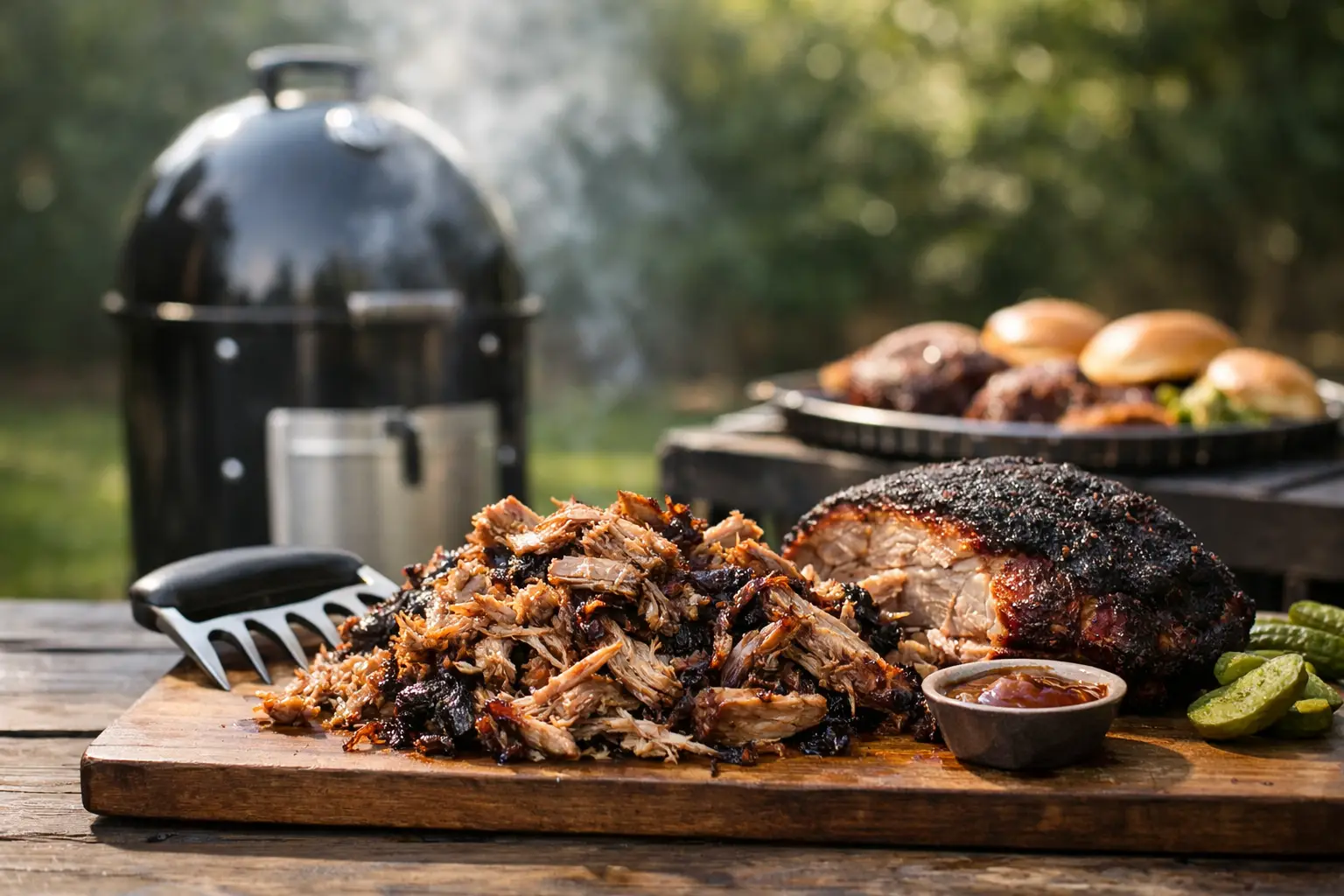
You know the cook is real when the pork shoulder goes on before sunrise and the coffee matters almost as much as the charcoal. If you want classic pulled pork Weber Smokey Mountain results, the good news is you do not need competition tricks or a garage full of gear. You need a solid pork butt, steady heat, enough time, and a little patience when the stall shows up.
The Weber Smokey Mountain has a loyal following for a reason. It holds temperature well, it is forgiving once it settles in, and it gives backyard cooks a very repeatable path to smoky, juicy pork. That last part matters, because pulled pork is not hard in theory, but it gets disappointing fast when the meat dries out or the bark never quite develops.
Why pulled pork on a Weber Smokey Mountain works so well
Pulled pork is one of the best matches for this smoker because pork shoulder likes a long, gentle cook. The Weber Smokey Mountain is built for exactly that. Its vertical design keeps heat moving efficiently, the water pan helps smooth temperature swings, and the enclosed setup makes it easier to run for hours without constantly fussing.
That does not mean every cook is automatic. A Weber Smokey Mountain can still run hot if the vents are too open, and weather can change the game. Wind, cold air, and direct sun all affect how the cooker behaves. Still, compared with lighter-duty smokers, it gives you a much wider margin for error.
Start with the right cut
For pulled pork, pork butt is usually the move. It is actually part of the shoulder, and it has the fat and connective tissue that break down into the texture you want. Picnic shoulder works too, but it tends to be a little less convenient and can cook slightly differently because of the skin and shape.
An 8 to 10 pound bone-in pork butt is a sweet spot for most home cooks. Bone-in tends to stay a little more forgiving over long cooks, and the bone gives you a nice doneness clue when it loosens up. If you buy boneless, it can still turn out great, but it may cook a bit faster and sometimes feels less uniform.
Keep the seasoning simple
Pulled pork does not need a complicated rub to taste good. Salt, black pepper, paprika, brown sugar, garlic powder, and onion powder will get you most of the way there. Some people lean heavier on sugar for a darker bark, while others keep it lower because sugar can darken fast if the smoker creeps hotter than planned.
A mustard binder is fine if you like it, but it is not magic. The rub sticks either way. What matters more is covering the meat evenly and seasoning early enough that the surface has time to get tacky before it hits the smoker.
If you want a stronger pork-forward flavor, go lighter on sweet ingredients. If you like that classic barbecue profile, a touch of sugar and paprika helps a lot. This is one of those it-depends moments. There is no single correct pulled pork rub.
Setting up the Weber Smokey Mountain
For a long pork shoulder cook, the Minion method is still the easiest approach. Fill the charcoal ring with unlit charcoal, then add a smaller amount of fully lit coals on top or in a small well in the center. That gives you a gradual burn instead of one big blast of heat.
Wood choice matters, but not as much as people think. Hickory and apple are both great with pork. Hickory gives you a stronger barbecue profile, while apple runs a little softer and sweeter. A mix of the two is hard to hate. You do not need a mountain of wood chunks either. A few fist-sized pieces are enough for clean smoke during the early part of the cook.
Water in the pan is a common setup, especially for newer cooks, because it helps moderate heat. The trade-off is that it can make the cooker slower to recover after opening the lid, and it adds one more thing to manage. Some experienced users run the pan foiled and dry for higher temps and easier cleanup. If you are after classic low-and-slow pulled pork on a Weber Smokey Mountain, water is a safe starting point.
The target temp that makes life easier
Aiming for 250 to 275 degrees is usually the best lane. Yes, plenty of cooks swear by 225, but pork shoulder is forgiving, and the slightly higher range often gives you better bark and a more manageable timeline.
That matters because pork butt can take longer than expected. A shoulder that looks like a 10-hour cook on paper can suddenly turn into 12 or 13. If dinner has a hard deadline, that extra cushion is your friend.
Put the pork on cold, straight from the fridge, and insert a probe if you use one. Then let the smoker do its thing. One of the easiest mistakes is chasing every small temp swing by constantly adjusting vents. Make small changes, then wait. The Weber Smokey Mountain responds better to patience than panic.
The stall is normal, not a disaster
At some point, usually in the 150 to 170 degree internal range, the pork may seem to stop cooking. This is the stall. Moisture evaporating from the surface cools the meat, and progress slows way down.
This is where a lot of backyard cooks start second-guessing everything. Do not. If the smoker temp is steady, the pork is still moving forward.
You have two options here. You can ride it out unwrapped for maximum bark, or you can wrap the shoulder in foil or butcher paper once the bark looks right. Wrapping helps push through the stall and shortens the cook. The trade-off is softer bark, especially with foil. If you care most about texture on the outside, wait longer before wrapping or skip it altogether. If you care most about timing, wrap.
When is pulled pork actually done?
Forget one magic number. Most pork shoulder finishes somewhere around 195 to 205 degrees internal, but the real test is feel. When a probe slides in with very little resistance, especially in multiple spots, it is ready.
The bone, if there is one, should wiggle easily. The meat should feel soft but not mushy. If it hits 203 and still feels tight, keep going. If it feels perfect at 198, trust the meat more than the number.
This is a big reason pulled pork is a better beginner smoke than brisket. It has more forgiveness. You still need to pay attention, but the window for success is much wider.
Resting is not optional
Once the pork shoulder is done, let it rest. This is the part people want to skip because the smell is ridiculous and everyone is hungry. Still, resting makes the finished pork easier to pull and helps the juices redistribute instead of spilling out all over the cutting board.
A minimum of 30 minutes works. An hour is better. If it is wrapped, you can hold it longer in a cooler or warm oven depending on your timing. That flexibility is one of the best things about pulled pork for parties. It is much easier to hold than chicken or ribs.
Pulling, seasoning, and serving
When it is time to shred, remove any large fat pockets that did not render and pull the meat into strands by hand or with shredding claws. Mix the bark through the softer interior meat so every bite gets some texture and smoke.
Taste before you sauce. This matters more than people think. Good pulled pork should already be well seasoned. A splash of the rendered juices, a little finishing salt, or a light vinegar mop can wake it up without burying the smoke.
Sauce is personal. Some people want it tossed in lightly, others want it on the side. Side service is usually the safer move because it keeps the bark from getting soggy and lets people build their own sandwich. Slaw, pickles, and soft buns are the easy classic play.
Common mistakes with pulled pork Weber Smokey Mountain cooks
The biggest one is not budgeting enough time. Pork shoulder is done when it is done, not when your guests arrive. Start earlier than feels necessary.
The second is over-smoking. Thick white smoke is not flavor, it is a warning sign. You want clean, light smoke, especially in the first few hours.
The third is opening the cooker too often. Every lid lift drops heat and adds time. If you are looking, you are not cooking.
And finally, do not slice into the shoulder just to check it. Use a thermometer and your probe feel test. Once the meat is ready, it will tell you.
The best part of this cook is that even your second attempt can be dramatically better than your first. A Weber Smokey Mountain rewards repetition, and pulled pork rewards patience - so if this weekend's shoulder is not perfect, you are still probably one very good sandwich away from wanting to do it again.