3 min read
TAKE A BREAK
What Does Peated Mean in Whisky?
Updated: 6/4/2026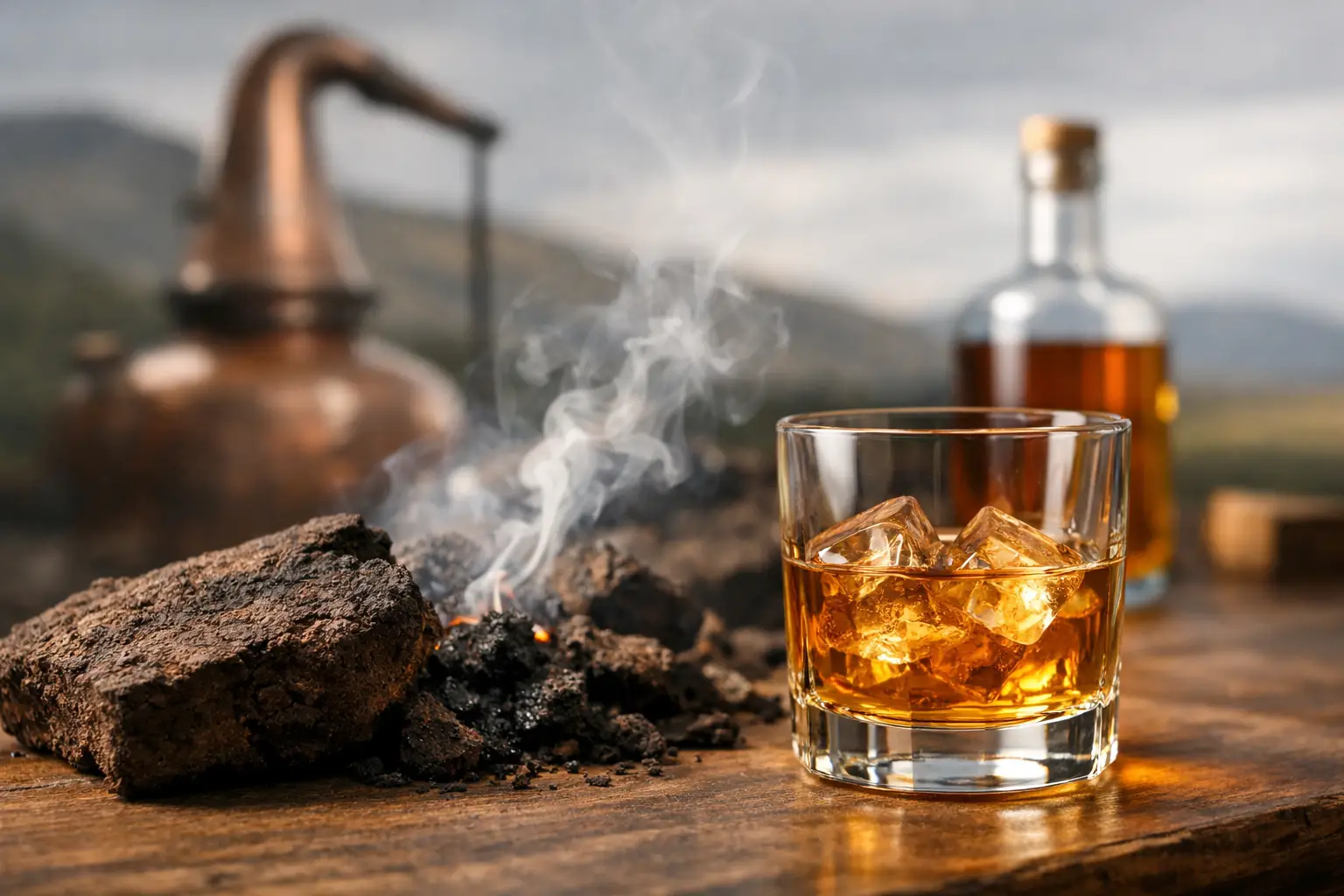
You take a sip of Scotch and get campfire, seaweed, iodine, or damp earth instead of caramel and vanilla. That usually leads to the same question: what does peated mean?
In whisky, peated means the malted barley was dried using smoke from burning peat. That smoke clings to the grain and carries through the distilling process, giving the finished whisky a smoky, earthy, sometimes medicinal character. It does not mean the whisky has chunks of peat in it, and it does not automatically mean the bottle will taste like a bonfire. The effect can be light and subtle or huge and aggressive.
What does peated mean, exactly?
Peat is partially decayed plant matter that forms over thousands of years in wet, boggy ground. In places like Scotland, it was historically cut, dried, and burned as a fuel source. Distilleries used it because it was available, practical, and cheap.
During malting, barley is soaked, germinated, and then dried to stop the process at the right moment. If peat is burned during that drying stage, the smoke infuses the barley with phenols, which are the compounds largely responsible for smoky aromas and flavors in whisky. That is the core answer to what does peated mean: the grain was exposed to peat smoke before distillation.
This matters because peat changes the whisky at a very early stage. It is not like adding liquid smoke after the fact. The smoke influence becomes part of the spirit's identity from the beginning.
What peated whisky tastes like
The word smoky gets used a lot, but that only tells part of the story. Peated whisky can show up in a lot of different ways depending on where the peat came from, how heavily the malt was peated, how the spirit was distilled, and how it was matured.
In one bottle, peat can read as soft fireplace smoke with notes of honey and cereal. In another, it can come off as ash, tar, brine, iodine, leather, or wet moss. Some drinkers pick up barbecue, burned herbs, or even a salty coastal quality. Others get bandages, which sounds strange until you taste it and realize people are not making it up.
That range is why peat can be polarizing. For some people, it is the most exciting thing in whisky. For others, it tastes like someone dropped a cigar into their glass. Both reactions are fair.
Peated does not always mean strong
One easy mistake is assuming that all peated whisky is intensely smoky. Not true.
Some whiskies use just enough peat to add a dry edge or earthy background note. Others go all in and make smoke the headline. The peat level is often measured in phenol parts per million, usually shortened to PPM, but that number only tells you so much. A whisky with a high PPM on the malt does not always taste bigger in the glass than one with a lower number. Fermentation, distillation, cask aging, and alcohol strength can all shift how that smoke comes across.
So if you have tried one heavily peated Scotch and hated it, that does not mean all peated whisky is off the table. A lightly peated bottle can feel much more balanced, especially when sweetness, fruit, or oak rounds it out.
Why peated whisky is often linked to Scotch
Peat and Scotch are closely tied because of geography and tradition. Scotland has long had peat bogs, and many distilleries used peat as a drying fuel out of necessity. Over time, that practical choice turned into a signature style.
The strongest association is with Islay, the small Scottish island famous for bold, smoky single malts. Islay whiskies often lean coastal and medicinal, although even there, styles vary more than people think. Other parts of Scotland make peated whisky too, but often in a different register. Highland peat can feel more earthy or heathery, for example, while some island styles bring extra salt and maritime character.
That said, peat is not exclusive to Scotland. Distilleries in Ireland, Japan, the US, and elsewhere also make peated whiskey or whisky. The flavor profile can still be smoky, but local ingredients, still design, and barrel choices often push it in a different direction.
Peated vs smoky: are they the same thing?
Usually, peated whisky is smoky, but smoky whisky is not always peated.
A whisky can show smoky notes from charred barrels, toasted oak, or blending choices without having been made from peated malt. Those smoky notes tend to feel different from peat smoke. Barrel smoke often comes across sweeter, woodier, or more like toasted spice. Peat smoke is usually more earthy, organic, and aromatic in a way that can suggest soil, sea air, herbs, or medicine.
If you are reading a tasting note and see smoke, it is worth checking whether the whisky is actually peated or just showing smoky qualities from maturation.
Why some peated whiskies taste medicinal
This is one of the things that surprises new drinkers most. Why would a whisky taste like iodine, antiseptic, or bandages?
That character comes from certain phenolic compounds created during peat smoking and shaped by the distillery process. It is especially common in some coastal Scotch styles, where peat character combines with salty air and a leaner spirit profile. To fans, that medicinal edge is part of the appeal. It makes the whisky feel wild, sharp, and memorable. To everyone else, it can be a shock.
The good news is that medicinal is only one lane. Plenty of peated whiskies are more about campfire smoke, grilled citrus, roasted nuts, or sweet malt than anything hospital-adjacent.
How to tell if a whisky is peated
Sometimes the label says it outright. You may see peated, heavily peated, smoky, or smoky malt printed clearly on the bottle or product description. Other times, you have to read between the lines.
If a Scotch comes from Islay, there is a decent chance peat is involved, though not always. Tasting notes that mention ash, bonfire, brine, tar, seaweed, or medicinal notes are also strong hints. If the bottle gives a PPM number, that is another clue, though plenty of brands skip that detail.
If you are ordering at a bar and want something approachable, ask whether the peat is light or dominant. That simple question can save you from getting a glass that tastes like a chimney when you were hoping for a gentle smoke.
Is peated whisky better?
Only if you like it.
Peat is a style choice, not a quality grade. A beautifully made unpeated whisky can be every bit as complex and satisfying as a peated one. Peat just gives distillers another way to build personality. It can add drama, structure, and contrast, especially when layered with sherry casks, bourbon barrel sweetness, or bright fruit notes.
There is also a trade-off. Heavy peat can flatten subtle flavors if it is not handled well. In some bottles, the smoke does all the talking. In others, it works like seasoning and lets the rest of the whisky show up more clearly. The best peated whiskies are not just smoky. They are balanced.
If you are new to peat, start here
If the whole category sounds interesting but a little intimidating, start with a lightly peated whisky rather than the biggest smoke bomb on the shelf. A gentle introduction lets you notice what peat is doing without getting steamrolled by it.
Try a small pour, add a few drops of water, and take your time on the nose before sipping. Water can open up the whisky and make the smoke feel less dense. Food can help too. Peated whisky often clicks with salty snacks, smoked meats, or sharp cheese because the flavors echo each other.
And if your first try is a miss, that does not mean peat is not for you. It may just mean that particular bottle was too medicinal, too ashy, or too intense for your taste. Peat has more range than its reputation suggests.
So, what does peated mean? It means the whisky got its smoke from peat-fired malt, and that one production choice can turn an ordinary sip into something earthy, coastal, savory, and weirdly addictive. If you are whisky-curious, peat is worth trying at least once - not because you have to love it, but because few flavors make a first impression quite like it.