3 min read
TAKE A BREAK
What Makes Whisky Peaty? The Flavor Explained
Updated: 7/30/2026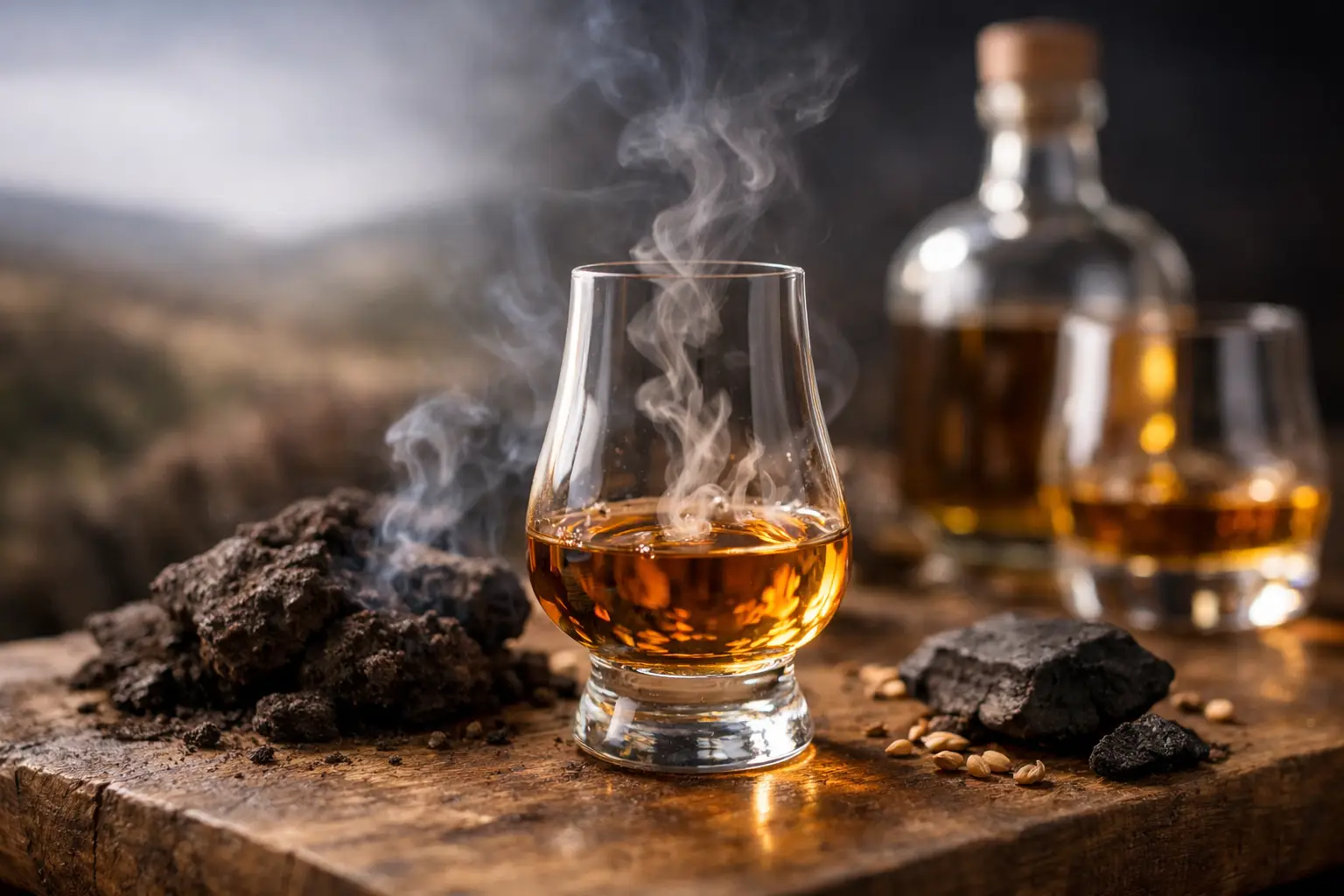
A glass of peaty Scotch can smell like a beach bonfire, a damp forest floor, or a bandage box - sometimes all at once. So, what makes whisky peaty? It starts long before the bottle, when barley is dried over the smoke of burning peat. That smoke leaves behind flavor compounds that can survive fermentation, distillation, and years in a cask.
For some drinkers, peat is an instant obsession. For others, the first sip can be a shock. Either reaction makes sense: peat-forward whisky is one of the boldest flavor styles in the spirits world, and its reputation is bigger than a simple “smoky” label.
What Makes Whisky Peaty?
Peat is partly decayed plant material that forms in waterlogged bogs over thousands of years. Because the ground stays wet and low in oxygen, plants break down slowly instead of becoming ordinary soil. Cut peat can be dried and burned as fuel, a practice with a long history in parts of Scotland and Ireland.
To make whisky, distillers first need to turn the starches in barley into fermentable sugars. Barley is soaked, allowed to sprout, then dried in a process called malting. If a distillery burns peat during that drying stage, the barley absorbs aromatic smoke.
That is the crucial point: peat does not get poured into the spirit. The smoke touches the malted barley, and the barley carries that smoky fingerprint into the whisky-making process. The final flavor may read as earthy, medicinal, mossy, ashy, leathery, salty, herbal, or sweetly smoky depending on everything that happens next.
The compounds behind the smoke
The big players are phenols, a family of flavor and aroma compounds found in smoke. You do not need a chemistry degree to spot them. Phenols are often what make a whisky suggest campfire, antiseptic, tar, clove, or charred wood.
Distilleries often measure the phenol level of their malt in parts per million, usually shortened to PPM. A higher PPM can mean a more intensely peated malt, but it is not a guaranteed smoke meter for the whisky in your glass. Some phenols are lost during distillation, and different distilling and aging choices can push the finished flavor in very different directions.
In other words, a 50 PPM malt does not automatically taste twice as smoky as a 25 PPM malt. It may taste more powerful, but the character matters as much as the number.
Why One Peaty Whisky Tastes Different From Another
“Peaty” is useful shorthand, but it covers a surprisingly wide range. One bottle can be bright and citrusy with a clean wisp of smoke. Another can bring sea spray, iodine, smoked fish, and a long, dry finish. The peat is only the opening move.
Where the peat comes from
Peat reflects the landscape where it formed. A bog with more moss, heather, grasses, roots, or woody material can create smoke with a different aromatic profile when burned. This is one reason distillers and whisky fans talk about local peat, although it is not always as simple as assigning a flavor to one specific island or region.
Coastal Scotch often gets described as salty or maritime. Some of that impression may come from the spirit style, warehouse conditions, and the power of suggestion, not just peat alone. Whisky matured by the sea does not literally absorb ocean water through the cask. Still, place can shape how a whisky feels, and the best bottles make that connection memorable.
The distillery still has the final say
After malting, the smoky barley is milled, mashed, fermented, and distilled. Each stage can soften, concentrate, or redirect peat’s character. A longer fermentation may build fruity notes that make smoke feel more tropical or creamy. The shape and size of the stills influence which heavier compounds carry over into the new spirit.
Cut points matter, too. During distillation, the distiller decides which portion of the run becomes spirit for aging. A heavier style can keep more oily, earthy weight, while a lighter style may make the smoke feel sharper or more elegant.
Then comes the cask. Ex-bourbon barrels often let vanilla, honey, and citrus sit alongside the peat. Sherry-seasoned casks can add dried fruit, chocolate, and spice, turning smoke toward barbecue sauce, roasted nuts, or dark caramel. A heavily charred barrel can amplify charred notes, while an active wine cask may pull attention away from the peat entirely.
Age is not a simple volume knob either. Older peated whisky can become more polished and integrated, with smoke folding into oak and fruit. Or the wood can eventually dominate. If you love the direct hit of ash and fire, a younger bottling may be more your speed.
Peat, Smoke, and the Myths Worth Clearing Up
The most common misunderstanding is that all smoky whisky is peaty. Not necessarily. A whisky can pick up smoke from toasted or charred barrels without being made from peat-smoked malt. American whiskey, for example, may taste smoky because of barrel char, while still lacking peat’s earthy, medicinal edge.
The reverse is also true: a peated whisky does not have to taste like licking a fireplace. Some lightly peated styles use smoke as a background note, adding texture and contrast to orchard fruit, malt sweetness, vanilla, or floral aromas.
Another myth is that peatiness comes from the water. Distilleries often have dramatic local water sources, but the core peaty flavor is created when smoke dries the malt. Water, yeast, still shape, maturation, and blending all matter, but they are supporting players in this particular story.
There is also a practical wrinkle. Peat is a finite natural resource, and peatlands store significant carbon while supporting distinct ecosystems. Some producers are reducing peat use, improving bog management, or testing alternative ways to create smoky styles. That does not erase the tradition, but it does make the future of heavily peated whisky more complicated than “more smoke is better.”
How to Taste a Peaty Whisky Without Getting Steamrolled
If peat is new to you, start with a small pour and give it a minute. Your first nose may be all smoke, but a second pass can reveal lemon peel, malt biscuits, vanilla, apple, seaweed, or black pepper. Take a small sip rather than a heroic one. Let it sit for a few seconds, then notice whether the smoke feels dry, sweet, earthy, oily, or medicinal.
A few drops of room-temperature water can help, especially with higher-proof bottles. It may open the aroma and make the alcohol less distracting. Too much water can flatten the flavor, so add it slowly. Ice is fine if that is how you enjoy whisky, though a large cube will mute aromas as it chills the drink.
Food can make peat click for people who are unsure about it. Smoked salmon, sharp cheddar, dark chocolate, grilled mushrooms, or salty roasted nuts often find common ground with a smoky dram. The goal is not to prove you have a “serious” palate. It is to find whether the smoke becomes more interesting when it has something to play against.
The Quick Way to Choose Your First Peaty Bottle
Look past the word “peated” and look for clues about style. “Lightly peated,” “smoky,” or “coastal” can be an easier entry point than bottles marketed around intense medicinal or heavily smoky notes. Ex-bourbon maturation often offers a cleaner mix of vanilla and smoke, while sherry casks usually bring a richer, darker profile.
If you already like barbecue, smoked tea, mezcal, roasted coffee, or charred foods, you may enjoy a bolder pour right away. If those flavors usually feel aggressive, seek a lighter peated whisky or try one in a tasting flight. Context changes everything, and a one-ounce sample is a smarter first move than committing to a full bottle.
The next time peat shows up in your glass, do not just ask whether it is smoky. Ask what kind of smoke it is, what sits underneath it, and whether you want more of it on the next sip. That is where peaty whisky stops being a challenge and starts becoming a flavor worth chasing.